Tuesday, July 22, 2025

“Windsor Wool and Balmoral Tweed: The Royal Roots of British Textiles”


A historical piece connecting the Queen’s wardrobe to the rise, fall, and preservation of Britain’s textile industry and traditional craftsmanship.

In the hush of the royal wardrobe, where history hangs as softly as wool flannel and as proud as Balmoral tweed, there lies a story that stretches far beyond the runway of royal appearances. “Windsor Wool and Balmoral Tweed” — a centerpiece of the 2026 exhibition Royal Style on Show — is not just an ode to Queen Elizabeth II’s timeless taste, but a rich tapestry of Britain’s rural industries, its national identity, and the intricate, intimate relationship between monarchy and material. They were part of an intricate, carefully maintained system of power dressing in its purest, most enduring form.

It begins, curiously, with the zip.

While the rest of the world zipped up and moved on, the Queen clung to the quiet dignity of buttons and hidden hooks. Zips, with their hard lines and occasional failures, were deemed too utilitarian, too fallible. And in royal dressing, failure was not an option. A stuck zipper could mean a delayed entrance or an awkward moment on global television.A row of hand-sewn fasteners, well hidden?  That required poise.That meant control.


Behind this seeming eccentricity was an entire philosophy: garments were built not to *react*, but to *perform*. The Queen’s clothing had to move with her, but never against her. Her wardrobe, after all, was her stage set. When the world watched, she could not afford to tug at fabric or readjust a collar. Every movement was rehearsed, every outfit fitted with precision by her dresser, confidante, and longtime collaborator Angela Kelly. Together, they perfected the visual language of monarchy: dignified, detail-obsessed, and utterly unflappable.

Logos were another invisible line in the sand.

In a modern era defined by branding, Queen Elizabeth stood apart. No labels. No emblems. No screaming designer names etched into the fabric of her public life. Not because she lacked access—indeed, the world’s best couturiers would have killed to dress her—but because monarchy does not advertise. Wearing logos would tether the Crown to commerce, and that, for Elizabeth, was unthinkable.


Her garments were deliberately anonymous, crafted by dressmakers whose reputations lived not on magazine covers, but in silent stitches. Even when she wore pieces by Norman Hartnell or Hardy Amies, their names were never paraded. Their fame was the Queen herself. In many ways, she inverted the celebrity–designer relationship: she didn’t *wear* fashion to gain influence; fashion gained reverence by *being worn* by her.


But the most defining rule of royal dressing was perhaps the simplest: **no mistakes**.

Mistakes were not limited to wardrobe malfunctions or misplaced brooches. In the Queen’s world, a mistake could be wearing the wrong color to a diplomatic meeting, accidentally matching another guest’s attire, or choosing a silhouette that clashed with protocol. Her clothing was not decorative—it was political. It had to communicate neutrality, dignity, and intent, all without uttering a word. And so, everything was trialed. Outfits were test-worn in Buckingham Palace’s corridors. Fabric was examined under multiple lighting conditions. Skirt hems were weighted to prevent gusty mishaps. New shoes were worn in by a royal aide to spare the monarch a blister.

Each outfit had a job, and that job was to eliminate distraction. The Queen had to be the message—not the dress.

Color was deployed like diplomacy. Yellow to lift morale on dreary hospital visits. Blue for peace. Green to honor nature and the Commonwealth. Black—rare, reserved—for mourning. Her bright hues, often joked about in tabloids, were never chosen for vanity. They were chosen so crowds could spot her from a distance. In a sea of heads and mobile phones, the Queen had to *be seen to be believed*. And she always was.


This exhibit doesn’t just display garments—it decodes them. A lavender coat from a 1981 state visit to Canada is shown alongside photographs of her audience, all in darker tones. The result? The Queen gleams like a lighthouse. A cream dress worn to the Vatican lies beside notes detailing its fabric’s lack of shimmer—chosen to reflect humility, not grandeur. Nothing was random. Every pleat had a purpose.


And perhaps that is the most astonishing realization: in a world increasingly obsessed with self-expression, the Queen dressed not for herself, but for the institution, for the moment, for the audience. Her fashion was not a diary. It was a constitution.


*“No Zips, No Logos, No Mistakes”* is more than a catchy title—it is a doctrine. It reveals how clothing, when stripped of ego, becomes a tool for precision, performance, and poise. And it leaves us wondering: in an age of excess, was Queen Elizabeth the last true minimalist?

Her style didn’t want applause—it chased legacy. And in the end, it never missed a step.

Monday, July 21, 2025

**“MangoTok: The Sweetest Trend Taking Over Social Media”**


A roundup of the funniest, thirstiest, most creative mango content across TikTok and Instagram—from ASMR slicing to mango-flavored K-pop fan edits.


It began innocently enough—someone, somewhere, posted a slow-motion video of a mango being sliced like silk, the golden flesh gleaming in summer light, a knife gliding through it with the gravity of a samurai sword. The sound? Crisp. The vibe? Addictive. The taste? You could practically smell the juice through the screen. Welcome to *MangoTok*, the strange corner of the internet where the common mango has become a cultural icon, a flavor sensation, a social media sensation, and, strangely enough, a form of fruit-flavored ASMR therapy.


 MangoTok is a movement in 2025, not simply a fad.  With more than **2.3 billion views and counting**, the mango has emerged as the unofficial summertime symbol of TikTok, a luscious protest against the bland dieting clichés and colorless wellness culture.While the internet can never resist something aesthetically pleasing, mango content has cracked a new code. It’s nostalgic but modern, sensual but wholesome, exotic yet accessible. MangoTok is not about mangoes per se—it’s about what mangoes *unlock* in us.

**The Aesthetics of Juiciness**

There’s an entire subgenre of MangoTok devoted to fruit-cutting artistry. People use Japanese carbon steel knives, dental floss, even guitar strings to slice the fruit with precision that would make a sushi chef weep. There’s the famed “hedgehog cut,” of course, but also edible mango roses, stacked cubes in neon bento boxes, and ice-cold mangoes cracked open like ancient treasure. Mango closeups have replaced latte art as the new “scroll stopper.” Food stylists drench mango slices in chili salt, Tajín, and lime, while others freeze-blend it into smooth sorbet, the camera lingering just long enough on that first satisfying scoop.

TikTok, with its hypnotic loops and obsession with transformation, was tailor-made for mango. You watch the skin peeled off in a single ribbon, the pit flicked away with a wrist-flick, the fruit devoured by grinning children, makeup artists, bodybuilders, monks—anyone. MangoTok democratizes deliciousness.

**Cultural Mangoism**

Unlike other trends that ignore context, MangoTok thrives on it. The comments are filled with “That’s how my *lola* did it!” or “This tastes like my dad’s mango tree in Lahore.” Whether it's India’s Alphonso, Mexico’s Ataulfo, or Haiti’s Francique, regional mango pride has exploded in hilarious and heartfelt ways. Videos now regularly feature “mango challenges,” where creators taste-test global varieties and rate them like sommeliers. There's even a viral duet format: one person eats a mango on screen while the other guesses where it's from based on the color, shape, or the way it clings to the seed.

This isn’t just fruit—it’s family. It’s childhood. It’s identity. MangoTok has turned into a vibrant digital museum of mango memories, where diaspora stories ripen next to beauty hacks and cooking tutorials.

**Mango ASMR, But Make It Sexy**

There is something undeniably sensuous about mango content, and MangoTok knows it. Whether it’s the slurp of a mango being bitten into whole, juice dripping down someone’s wrist, or the silky slide of a mango smoothie poured into a chilled glass, the sensory overload is intentional. MangoTok’s top influencers speak in soft tones while describing the mango's “citrusy kiss” and “syrupy kiss of the tropics.” It’s thirst trap meets tropical farm-to-table.

Some of the most viral clips are simply close-ups of a spoon carving through perfectly ripened fruit—no music, no filters, just the squish and glide. Mango ASMR is now a thing, soothing millions before bedtime.

**From Micro-Influencers to Mangoes**

 MangoTok has stayed delightfully grassroots in contrast to other cuisine trends that have been taken over by mega-brands. A Thai street vendor carving mangoes in real time has as much clout as a New York chef plating mango ceviche on crystal.By expressing their distinct mango point of view, MangoTok has given rise to new influencers such as fruit whisperers, mango historians, and grandmothers with secret cutting methods.


Several creators have turned this into small businesses: selling mango-scented candles, mango-pit jewelry, even customized mango-carving kits. And yes, mango merch exists—caps, tote bags, and hoodies emblazoned with slogans like *Stay Juicy* and *Team Ataulfo*.

**Why Mango? Why Now? **

 The emergence of MangoTok in 2025 has a lyrical quality.  The mango stands tall as a symbol of warmth, sweetness, and joy in a society that has been struggling with issues like digital exhaustion, cultural polarization, and climate stress. It’s unpretentious. It grows in the Global South. It refuses to be eaten neatly. It demands you use your hands, your senses, and your smile.

MangoTok is about celebrating flavor in a world that often rewards blandness. It’s a dopamine drip of sunshine in video form. And honestly? We could all use a little more mango in our feeds—and our lives.

So the next time you see a perfectly cubed mango dance across your screen to lo-fi beats, don’t scroll past. Linger. Savor. Double-tap.

Because *juiciness is a mindset*, and MangoTok is leading the revolution—one bite at a time.

The Empty Bowl: Why the World Keeps Failing Gaza’s Children?


A visual-heavy feature with photographs of abandoned fridges, dry markets, and the haunting silence of hunger. As foreign powers offer meaningless denunciations, it follows five families in Gaza as they struggle with famine.


In a war-scarred corner of Gaza, a mother sets an empty bowl in front of her daughter and pretends it's full. She makes the sounds of eating with her spoon, coaxes her child to do the same, and waits for sleep to come before grief overtakes her. The bowl, like the international promises surrounding it, remains hollow.


**“The Empty Bowl: Why the World Keeps Failing Gaza’s Children”** is not just a story about hunger—it is about the systemic collapse of empathy. It’s a window into a suffocating landscape where political rhetoric has replaced nourishment, where every calorie is contested, and where the smallest citizens—babies, toddlers, kindergartners—are paying the heaviest price for grown men’s wars.


The article opens in a neonatal unit lit by battery-powered lanterns. The ventilators are silent. The formula has run out. The doctor, once a confident pediatrician trained in Cairo, now doubles as a mortician. He washes the bodies of the children he couldn’t save.Through his eyes, we see how Gaza's hunger is a well planned consequence that results from siege, bureaucracy, and failed diplomacy rather than being the product of starvation, drought, or natural disasters.


At the heart of the piece is a four-year-old girl named Lina, who died of malnutrition. Her ribs poked through her thin skin like tree branches in winter. Her family survived on tea and boiled weeds. Her last word was “apple.” She had never tasted one. The article does not just name her—it sits with her memory, excavates her drawings, speaks with her siblings, and insists on making her real to a world that has grown numb to statistics.


“The Empty Bowl” interrogates why these deaths are treated as background noise. It traces the hollow declarations from international bodies—UNICEF’s urgent calls, EU hand-wringing, U.S. vetoes—and contrasts them with aerial photos of aid trucks rotting at sealed borders. The global community responds with performative outrage and hashtags, but when confronted with the logistics of actually feeding starving children under siege, it folds like a paper promise.


This isn’t just a moral failure. It’s a media one, too. The piece breaks down how headlines use passive language to minimize the horror: "dies of hunger," "succumbs to malnutrition," and "food insecurity rises."  The violence inherent in hunger itself is redirected by these words.  According to the essay, starvation is a policy rather than just a result.


Interviews with aid workers reveal another grim truth: the delivery of food is now as dangerous as smuggling weapons. Convoys are bombed or denied access. Distribution centers are flattened. Rice is rationed by the spoonful. One aid coordinator shares a chilling quote: “In Gaza, it’s easier to import death than flour.”


The story travels beyond the enclave, too. It weaves in reactions from diaspora Palestinians, human rights lawyers, and Israeli voices who oppose the siege. A Tel Aviv activist calls the food blockade “a stain on Judaism and humanity,” and recalls how her grandmother, a Holocaust survivor, would whisper prayers for children she never knew. “We were supposed to be better than this,” she says.


In perhaps its most searing passage, the article places a photograph side by side with a political ad. On one side: Lina’s empty bowl. On the other: a candidate in the West gleefully declaring support for “Israel’s right to defend itself.” The juxtaposition demands a question: defend itself from what? A child with no bread?


But “The Empty Bowl” is not only an elegy. It is a call to conscience. It highlights grassroots efforts—local farmers growing food in underground tunnels, clandestine bakeries feeding neighborhoods under cover of night, and the international volunteers refusing to look away. It names the failures, yes, but also points to the people refusing to be complicit in them.


The piece ends not with closure, but a question. It returns to the mother from the beginning, who is now silent before the same bowl. She doesn’t pretend anymore. The child is gone. The spoon is still. The hunger remains—not just in Gaza, but in every corner of the world that looked, shook its head, and moved on.


“The Empty Bowl: Why the World Keeps Failing Gaza’s Children” is journalism with a pulse, not just pixels. It is testimony against erasure, a monument in ink, and an indictment of every power that let a child’s last word be a fruit she never tasted.

Saturday, July 19, 2025

Asylum by Aston Martin: The Bizarre Politics of Deportation in the Age of Instagram


How modern immigrants are using clout, cars, and clicks to highlight injustice.


In a country once defined by stiff upper lips and stoic bureaucracy, the sight of a grinning man from Albania cruising the streets of London in a metallic blue Aston Martin — license plate proudly reading “DEPORTD” — isn’t just surreal. It’s a siren. A symbol. A full-blown cinematic moment in a Kafkaesque comedy, except the set pieces are real, the Home Office is flustered, and the internet is eating it up like popcorn.


Welcome to 2025, where immigration battles no longer unfold quietly behind immigration desks or courtroom doors, but instead go viral, meme-ified, stylized, and monetized in the town square of social media. The “asylum by Aston Martin” phenomenon isn't just a tabloid-worthy oddity; it’s a cautionary tale and a cultural pivot. It tells us everything about the state of UK immigration policy, the weaponization of personal branding, and the ways in which power is increasingly challenged not through formal protest—but through viral pettiness with a dash of turbocharged flair.


The man behind the wheel? An Albanian national whose deportation order has been held in limbo for years due to a blend of legal loopholes, human rights appeals, and procedural delays. He is, legally speaking, untouchable—for now. And he knows it. Instead of ducking the spotlight, he embraced it. His car, a sleek status symbol of wealth and Western aspiration, has become his chariot of irony. His number plate? A message to the state that failed to move decisively. His Instagram? A shrine of viral bait, sarcastic commentary, and glamour photos.


 There is more than one person participating in this protest.  It's a brilliant example of using flair to defy authority.  The days of the undocumented immigrant story being confined to the dark and suffering are long gone.In the digital era, the savvy outsider knows the algorithm is more powerful than the gavel. And in this case, the UK government has found itself on the back foot, mocked not just for its legal stagnation, but for being outplayed on the PR battlefield.


This moment forces a reexamination of the immigration system through a deeply uncomfortable lens: aesthetics and optics. What happens when bureaucratic impotence is made visually absurd? When the language of protest isn’t a hunger strike or a courtroom plea, but a sports car parked outside Parliament? Social media has flattened the playing field. The Home Office communicates in press releases; its critics now speak in cinematic reels, ironic soundtracks, and filters that turn bureaucratic tragedy into TikTok comedy.


And then there’s the deeper irony—the Aston Martin itself. A British icon. James Bond’s signature steed. Here, repurposed not to chase villains but to flaunt the villainization of the migrant body. It’s poetic in the most piercing sense: a car born of empire now driven by someone who slipped through the imperial net. The symbolism is almost too perfect. And in that perfection lies its potency. It’s an open wound, photographed daily.


Of course, outrage has followed. Right-wing commentators howl about “mockery of justice,” while civil servants scramble to explain how deportation orders can fizzle into farce. But the real tragedy isn’t that this man drives a car. It’s that the immigration process—its delays, contradictions, and opaqueness—allowed the performance to happen in the first place. This moment didn’t arrive by accident; it was engineered by systemic dysfunction.


In another time, this might have been a blip. But in the age of Instagram, permanence is digital. Each post is an archive. Each share, an indictment. And while critics argue that such public displays trivialize the serious work of immigration reform, others see it differently: as the natural consequence of a system that too often reduces people to cases and paperwork. In this way, the Aston Martin isn’t just a troll—it’s a flare. It signals that the governed are now fluent in the language of spectacle, and that language can no longer be ignored.


“Asylum by Aston Martin” isn’t about whether one man should stay or go. It’s about a much more uncomfortable truth: that symbols now matter more than statutes, and that the battle over who gets to belong isn’t fought solely in court—it’s fought in feeds, on dashboards, in likes, and in license plates. In this warped reality, immigration isn't just a legal process. It's a brand. A meme. A message.


And until governments catch up to that truth, the road will continue to be lined with irony, exhaust fumes, and Instagram filters that turn national anxiety into a viral aesthetic.

Friday, July 18, 2025

**The Sky Is Not Silent: A Night with the Perseids and a Thousand Crickets**


A poetic field report from a rural meadow, blending meteor counts with nocturnal soundscapes and reflections on silence, stars, and solitude.


There is a hum to the world that most of us forget to hear.The primordial whispers of nature are drowned out by the artificial light and mechanical murmurs that throb in cities.  But the Earth talks out there, in a field, on a hill, beneath a sky unmarred by neon and glass.  And that language becomes symphonic with the arrival of the Perseids.


On this particular night, I stepped away from civilization and into the hush of a country clearing, miles from the nearest electric sigh. A sleeping bag, a flask of coffee, and a vague sense of wonder were all I brought. I wasn’t alone, though I came by myself. Around me, the crickets began their chorus—not timid, not tentative, but confident, like a million fiddlers tuning for a grand, forgotten concert.

Above, the sky pulsed with anticipation. It wasn’t silent. It breathed. The stars blinked awake as if someone had dusted the firmament clean. Then the first streak came: white fire tearing across black velvet. A gasp escaped me before I could think to hold it back. The Perseids had arrived.


To witness the Perseid meteor shower is not merely to “see shooting stars.” That phrase is criminally mundane for what happens in the sky each August. These are not passive celestial events; they are wild, feral, burning messengers, dashing across the heavens with a grace that borders on arrogant. The air feels charged, as though each streak lights up something not only in the atmosphere, but inside your chest. Each one rips away the curtain of your daily life just long enough to remind you of how vast, how beautiful, how alive everything is.

Crickets chirped with unflinching rhythm, as if they had rehearsed their part in the show. Some people call them background noise. Tonight, they were the earth’s percussion, an acoustic blanket of life reminding me that while the meteors flamed above, the world below was also brimming with magic.


A meteor blazed eastward, a silver whipcrack. Then another. Some were faint scratches in the night; others carved luminous scars that lingered long after the burn. I found myself whispering wishes, even ones I didn’t know I still carried—childish hopes, impossible longings, silent apologies.


Somewhere nearby, a barn owl called once, twice. The wind shifted in the grass. The night had its own pulse, and for the first time in a long while, I didn’t need music, or news, or scrolling blue light to feel alive. The Perseids were enough. The crickets were enough. I was enough.

Lying back on the ground, I became aware of the paradox: the vast sky above, infinite and cold, was making me feel more human, more grounded. My problems didn’t vanish—they simply faded into the background hum of the universe, joining the static of stars. The celestial firestorm was a reminder that time is always moving, always burning, always remaking itself. And that I, like those streaks of ice and dust, was only passing through.


The Perseids, after all, are not even stars. They’re fragments—bits of Comet Swift-Tuttle shedding trails that the Earth plows through every year like clockwork.In actuality, they are space garbage.  Nevertheless, they are stunning.  Perhaps evidence that, with the correct timing, even the tiniest cast-offs can become stunning.


 Hours flew by.  I sketched stars, counted flashes, and listened to the sacred cadence of the thousand crickets.In the distance, a fox barked once, the sound sharp and unreal, as if punctuating the night’s dreamlike logic. I smiled. This was no silent sky. This was no dead space.

Eventually, dawn crept in, soft and shy. The meteors faded, the stars bowed out, and the crickets quieted one by one, like lights going off in a house too full of memories. The concert was over, but the echo of it stayed behind, tucked somewhere in my ribs.


I walked back to my car barefoot, dew clinging to my soles. The engine groaned awake, the digital clock blinked at me, and I sighed—not in sadness, but in the awe of having touched something eternal.

The sky is not silent. The earth is not still. And we are not alone in our longing to remember that.

That night with the Perseids and the thousand crickets didn’t change the world. But it reminded me that the world doesn’t need changing to be extraordinary. It only needs noticing.

Thursday, July 17, 2025

“When Stoic Becomes Static: Eric Bana and Sam Neill Deserve Better Scripts”


A character study on how two acting greats are underutilized in a sluggish script.

Eric Bana walks into frame like a man made of granite. Sam Neill squints toward the sun, jaw locked in timeless weariness. On paper, Untamed should’ve been a triumph — a slow-burn Western steeped in moral ambiguity and frontier grit, anchored by two of the most quietly commanding actors working today. Instead, it sputters out like a campfire left too long unattended, leaving Bana and Neill stranded in a desert of beautiful nothingness.

There’s a difference between stoic and static, and Untamed doesn’t seem to know where the line is — or that it exists at all. The six-part Netflix miniseries sells itself as brooding and deliberate, but somewhere between its panoramic drone shots of dry brush and dialogue that sounds like it was filtered through a dust storm, the show forgets to give its characters anything to actually do. It's less "slow-burn mystery" and more "existential waiting room."

Let’s be clear: Eric Bana and Sam Neill are not the problem. In fact, they’re the only flickers of electricity in an otherwise drained battery. Bana brings his usual simmering intensity to the role of Jack Morland, a disgraced ranger whose past is meant to haunt the present, but never really materializes beyond some artfully lit scowling. Neill plays Father Jude, a whiskey-sipping priest with a rifle under his robe and pain behind his eyes — a role that screams “scene-stealer” but is somehow reduced to mumbled parables and a few slow walks into town.

Both actors perform as if the material might eventually give them something to sink their teeth into. It doesn’t. Instead, they’re left to glower meaningfully at dust storms, exchange cryptic one-liners, and wear the hell out of wide-brimmed hats. What should be an acting showcase becomes a cinematic wasteland — the acting equivalent of trying to cook a steak on a stove that never turns on.

What’s most frustrating about Untamed is how clearly it thinks it’s deep. It borrows the aesthetic cues of prestige drama — amber lighting, mournful string arrangements, tight close-ups held just a beat too long — but confuses mood with meaning. The plot, which nominally revolves around a missing girl and the unraveling of long-buried secrets, moves forward in fits and starts, often retreating into flashbacks that offer neither clarity nor emotional payoff.

Dialogue is delivered in a hush, not because the characters are sharing something sacred, but seemingly because the script is afraid of saying anything too direct. Everyone speaks in ellipses. Conversations dangle without resolution. And while this kind of narrative minimalism can work in the right hands (see True Detective Season 1 or The Proposition), here it just feels like undercooked writing disguised as artistic restraint.

It’s a disservice not just to the audience, but to Bana and Neill — two performers who specialize in restrained, tightly-coiled emotion. In a richer, more confident story, their silences would speak volumes. Here, they whisper into a void. There are no real arcs, no internal reckoning, no tension that earns its release. Just vague trauma references, cowboy stares, and a whole lot of boots crunching on gravel.

There’s a particular cruelty in watching talented actors shoulder a weightless script. Bana, whose work in The Dry and Munich showed his talent for haunted resilience, is forced to anchor a character with no real compass. Neill, capable of so much nuance (see Hunt for the Wilderpeople or even Peaky Blinders), is given an outline of a tragic figure but none of the shading that would make it resonate.

Visually, the series is often stunning — sunsets wash the outback in firelight, dust particles drift like ghosts through abandoned churches — but cinematography alone can’t replace story. And without a meaningful script to support them, even actors of Bana and Neill’s caliber become like statues: weathered, dignified, and tragically immobile.

By the end of Untamed, you don’t feel heartbroken or provoked. You feel like you’ve watched six hours of foreplay with no payoff. It’s the kind of show where nothing is said plainly, everything is implied, and somehow, nothing sticks. The mystery fizzles. The emotions never peak. And the final revelation lands like a sigh, not a shudder.

It’s a shame. Because Bana and Neill are titans of underplayed intensity, and they deserve scripts that give them space to erupt, not just smolder. Stoic is a tool — a powerful one — but when overused, it calcifies into static. And static is what Untamed ultimately becomes: a series that mistakes silence for strength, restraint for depth, and ambiance for story.

Give these men a script with blood in its veins next time. They’ve more than earned it.

Wednesday, July 16, 2025

💃 Legends in Lace: The Women Who Redefined Power Dressing at the 2025 ESPYs


Billie Jean, Caitlin Clark, Serena—when icons walk the carpet, rules are rewritten.

There was a time when power dressing meant stiff blazers, shoulder pads, and a palette confined to blacks and greys. But at the 2025 ESPY Awards, the women of sports didn’t just rewrite that rulebook—they torched it and scattered the ashes down the red carpet in a trail of silk, satin, and lace. This wasn’t fashion for applause. This was fashion as authority, identity, and reclamation. The ESPYs stage belonged to champions—but the carpet belonged to the queens who’ve learned that vulnerability is the new armor, and elegance can roar louder than any trophy speech.

When Serena Williams arrived, the cameras didn't just flash—they froze. Draped in a structured blush lace corset dress with sculptural sleeves, she looked like royalty carved from marble. But it was the detail that held the real story: her dress was stitched with 23 pearls along the hemline, a subtle tribute to her 23 Grand Slam titles. Lace, once the textile of fragility, wrapped itself around the most dominant force tennis has ever seen. She didn’t need to swing a racket—her walk alone was a power serve.

Next came Caitlin Clark, fresh off her WNBA Rookie of the Year win, shattering records and expectations in equal measure. She chose a black tulle dress with sharp, tailored lines and transparent panels that whispered both confidence and rebellion. The whispers in the crowd weren’t about her stats—they were about the quiet defiance of a woman who, after a year of being underestimated, had dressed like a ghost haunting every critic who doubted her rise. She didn’t just wear the moment—she owned it.

Megan Rapinoe, the retired soccer icon turned activist-fashion muse, skipped the traditional gown entirely. Instead, she stunned in an ivory lace pantsuit with exaggerated flares and a translucent cape that billowed like a protest flag. She paired it with neon-pink hair and a pair of vintage Doc Martens because, of course she did. Rapinoe doesn’t dress to please—she dresses to provoke. And this year, she proved yet again that power is not always loud; sometimes it’s draped in lace and says everything without a single word.

But perhaps the most jaw-dropping transformation came from Aliyah Boston, who has quietly emerged as one of basketball’s most stylish rising stars. She walked the red carpet in an emerald green lace ensemble that blended traditional Caribbean textures with modern Western design. The gown, custom-made by a Black woman designer from Barbados, featured hand-stitched motifs that referenced sea turtles and sugarcane—an homage to Boston’s roots. She didn’t just wear a look; she wore a legacy.

And then there was Billie Jean King, the pioneer who once wore tennis whites as a declaration of battle, now gliding across the carpet in a regal midnight blue gown, sheer lace sleeves peeking out from under a velvet blazer. She was the past, the present, and the proof that evolution is the real prize. At 81, she wasn’t just invited—she was revered. Every glance her way was a thank-you, a nod, a recognition that none of this could’ve happened without her footsteps on the court and in Congress.

There were others, too. Skylar Diggins-Smith, who wore an ombré lace gown that changed colors under the lights, as if signaling the multiple identities she navigates—mother, athlete, entrepreneur, activist. Naomi Osaka, who paired soft pastel lace with boxy sneakers and a baby bump, a walking contradiction that only she could make look effortless. Each woman told a story, not just through their choices, but in the defiant ease with which they wore them.

The 2025 ESPYs didn’t just showcase fashion—they staged a revolution. These women weren’t asking for attention; they demanded presence. Lace, often seen as soft, delicate, or submissive, was reimagined as bold, strategic, and unapologetic. The sheer panels didn’t reveal skin—they revealed power. Transparency wasn’t a gimmick—it was a metaphor. And femininity wasn’t a costume—it was a weapon.

Power dressing is no longer about emulating masculinity. It’s about defining your own shape, your own fabric, your own rules. These legends, wrapped in lace and layered in symbolism, made it clear: the future of sports isn’t just fast, strong, or relentless. It’s beautiful. It’s bold. And it’s wearing heels.

At the 2025 ESPYs, the red carpet didn’t just welcome champions. It became a runway for revolutionaries. And in every stitch of lace, there was a message: elegance is strength. Vulnerability is courage. And when legends dress like this, they don’t just walk—they reign.

Tuesday, July 15, 2025

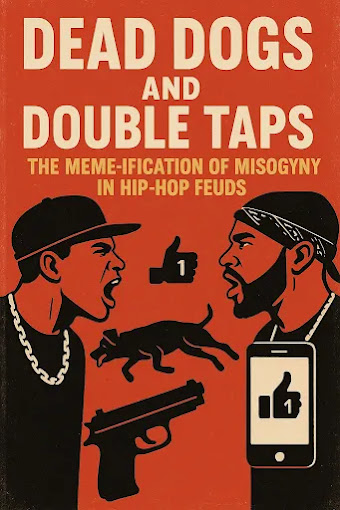
"Dead Dogs and Double Taps: The Meme-ification of Misogyny in Hip-Hop Feuds"


A media literacy article on how outrageous moments go viral, even when they cross moral lines.

It started with a tweet. Then came the retweets, the Instagram stories, the fan-cam mashups set to sped-up Doja Cat tracks, and the inevitable wave of TikTok stitches. Before the dust could even settle, Nicki Minaj’s inflammatory jab at SZA—saying she sounded “like a f**king dead dog”—had evolved into a meme. But beneath the viral humor, the remix culture, and the digital frenzy lies something darker: a culture where misogyny cloaked in pop culture pettiness gets liked, shared, and celebrated.

In hip-hop, feuds are nothing new. They've always been part of the ecosystem, sometimes elevating lyrical battles to the level of sport. But there’s a difference between dissing someone’s bars and likening a Black female artist’s voice to roadkill. When women become the target—and when that targeting becomes entertainment—we cross into a realm that demands scrutiny. The digital space doesn't just reflect culture anymore. It mutates it, distorts it, and monetizes even its ugliest impulses. That’s what we’re witnessing now.

Nicki Minaj’s choice of insult wasn’t just harsh; it was viscerally dehumanizing. The phrase “dead dog” isn’t simply a description—it’s an image, a smell, a rotting metaphor intended to evoke disgust. It’s a rejection of value, of vitality, of art. It’s cruel. And yet, within hours, it was a punchline. Users were lip-syncing the line on TikTok, inserting barking sound effects, overlaying funeral dirges onto SZA performance clips. It was viral gold—and that’s precisely the problem.

Because when cruelty is catchy, misogyny becomes marketable.

This is the meme-ification of harm: the transformation of emotionally violent speech into digital currency. A shocking phrase becomes a trending sound. A petty insult becomes a punchline. And the more outrageous the attack, the better it performs in the algorithm. Likes, shares, and double taps become social proof—not of artistic genius or critical discourse, but of who won the internet for the day.

What’s worse, women—especially Black women—are often left to bear the brunt of this cultural economy. In rap, when two men feud, their blows are parsed as lyrical strategy. When women feud, it’s catty. It’s emotional. It’s “bitch behavior.” And when one woman degrades another, it’s somehow easier for the internet to indulge. Why? Because it's internalized. Because we’ve come to expect this, and in some ways, to enjoy it.

This is a twisted kind of digital theater. Audiences aren’t just watching these spats unfold; they’re participating. Fans pick sides like it’s a reality show. They post memes, remix quotes, and weaponize old interviews as ammunition. This isn’t commentary—it’s content creation. And in the rush to be clever, we often forget the real people behind the screen names.

SZA, for her part, remained largely silent in the immediate aftermath, letting the noise crescendo without interruption. That silence said more than any clapback ever could. It was dignified. But also damning. Because in a culture that rewards volume and venom, silence gets ignored. Or worse—it gets mocked.

Meanwhile, Nicki Minaj, a legend in her own right, continues to embody one of the most complex paradoxes in modern music: a woman who has broken barriers for female rappers while sometimes tearing down the very women who followed her through those doors. Her career has long walked the line between icon and instigator. And that line keeps getting blurrier.

So, what does all this say about us?

It says that we’re complicit. That we’ve grown too comfortable with watching women battle in public as if it’s gladiator sport. That we excuse harmful language if it comes wrapped in glittering celebrity. That we double tap dehumanization if it makes us laugh for half a second.

And this isn't just about Nicki or SZA. It's about what we amplify. What we normalize. What we reward.

Misogyny in hip-hop—and in our broader culture—doesn’t always show up in obvious ways. Sometimes it arrives wrapped in memes, carried by viral sounds, disguised as shade or "just jokes." But whether it’s overt or dressed up in internet irony, it still does damage.

The solution isn’t censorship. It’s consciousness. It’s asking ourselves why we laugh. Why we share. Why we let cruelty become content. It’s choosing to engage with culture more critically, more compassionately.

Because if we don’t check ourselves, we’re going to keep making memes out of moments that should make us uncomfortable. And sooner or later, we won’t just be laughing at someone—we’ll be laughing at ourselves.

And that, unlike a feud, won’t be so easy to walk away from.

Monday, July 14, 2025

“Four Titans, One Ring: WWE Just Lit the Fuse on a Potential Match of the Year”


A feature forecasting an epic fatal four-way (or tag match) born from this unexpected rescue.

It started with a rescue. It ended with a war cry.

In one of the most jaw-dropping moments of the WWE year, Roman Reigns made his seismic return—not to reclaim a throne, but to drop a warning. The scene unfolded like a perfectly scripted fever dream: CM Punk and Jey Uso cornered and brutalized, their momentum crushed beneath the brute force of Bron Breakker and Bronson Reed. Chaos filled the ring. The crowd? On its feet, stunned and screaming. And then—**BOOM.** Music hit. The arena roof nearly tore itself off.

Roman Reigns, the Tribal Chief, The Head of the Table, returned not as a silent observer or backstage puppet master—but as a savior, a warrior, a game-changer.

And just like that, **WWE may have set the stage for a match so electric, so combustible, it’s already being whispered about as a Match of the Year contender.**

Let’s unpack it.

### The Four Forces Colliding

The match practically writes itself: Roman Reigns, CM Punk, Bron Breakker, and Bronson Reed. Four wildly different men—each with unique identities, legacies, and motivations—facing off in a ring that suddenly feels too small for their combined egos and energy.

Roman is the proven monarch, having ruled WWE for over 1,300 days with an iron spear and stoic presence. He’s been gone, yes—but not forgotten. Every storyline whispered his name in his absence. Now, he's back to reclaim or redefine what his kingdom looks like.

Then there’s CM Punk, a man both revered and reviled, depending on where your loyalties lie. A return to WWE that already sparked shockwaves is now colliding with Reigns' path again. Their shared history, marked by barbed promos and real-world heat, adds a powder-keg intensity to this scenario. When Punk stood back up and locked eyes with Roman after the save, it wasn’t brotherhood—it was **unfinished business.**

Jey Uso represents emotion in motion. A man forged in the Bloodline’s fire, scorched by betrayal, and baptized by self-worth. He was once Roman’s right hand—and then his rebellion. Saved by the same man who made him, Jey’s role in this clash is the most volatile. Loyalty is no longer clear-cut. His fists might say thanks, but his heart? Still conflicted.

And finally, the new school juggernauts: Bron Breakker and Bronson Reed. The former is a second-generation monster with nothing to lose and everything to prove. His explosiveness makes him the perfect antagonist for aging alphas. Reed, meanwhile, is the wall you can’t climb. Quiet, cold, and crushing—he brings an unstoppable presence that terrifies from bell to bell. These aren’t just the future—they’re the *now,* and they’ve declared war on the old guard.

### The Reason It's Not Just a Match

 There is no rivalry here.  It's a reckoning.


 These four individuals each represent a distinct aspect of WWE's changing terrain.  The rebel of the past is punk.  Right now, Reigns is in charge.Breakker is the fury of the future. Reed is the force that bridges brutality across all eras.

Put them in one ring, and you don’t just get high-impact moves—you get philosophy. You get legacy. You get trauma, revenge, and redemption **all colliding in real time.**

Imagine the moments. Punk and Roman, trading icy stares before exploding into fists. Breakker lifting both Reigns and Punk in a shocking power display. Jey Uso with that look—the one that says, “I don’t know if I should help you or hit you.” Reed coming in like a wrecking ball, silencing everyone with one well-timed splash.

There’s no part of this story that doesn’t scream *blockbuster.*

### Match of the Year Potential?

Absolutely. If WWE leans into this feud with the storytelling intensity it deserves—this isn’t just a marquee match. It’s **a statement.**

It tells fans that comebacks can still surprise us. That new stars can threaten legends. That emotional nuance and physicality don’t have to be separate. This is about passing the torch—or maybe refusing to let it go.

For fans, it’s a dream match wrapped in real stakes. For WWE, it’s proof that its creative engine still has horsepower left in the tank.

And if it happens on a grand stage—SummerSlam, Survivor Series, or even WrestleMania itself—expect fireworks that rewrite the future and reframe the past.

**Four Titans. One Ring. No escape.**
WWE hasn’t just teased a match.
They’ve unleashed a battlefield.

And we’re all front-row for the storm.


**“From the Shadows to the Spotlight: Is Bitcoin Now Too Big to Ban?”**


Analysis on whether governments still have the power—or will—to regulate or outlaw crypto at this scale.

Not long ago, **Bitcoin** was whispered in the corners of the internet—spoken of in chatrooms, traded in secret, and misunderstood by almost everyone outside the cypherpunk fringe. It was an experiment, a punchline, a digital curiosity born out of distrust in governments and centralized power. In 2009, the idea of a decentralized currency sounded like science fiction. In 2013, it was a tool for Silk Road smugglers. In 2017, it was a bubble waiting to burst. And now, in 2025, with Bitcoin topping **\$120,000** and appearing on balance sheets from **Fortune 500 companies to nation-states**, the question is no longer whether Bitcoin is real. It’s this:
**Is Bitcoin now too big to ban?**
Once the outlaw, Bitcoin has become the reluctant celebrity—pulled into the spotlight, wearing a suit tailored by hedge funds, flashing a smile at regulators who once tried to erase it. Despite countless bans, restrictions, and smear campaigns, it has refused to die. China banned it—multiple times. India tried. Turkey wavered. The European Union once feared it. And yet, block after block, wallet after wallet, Bitcoin kept ticking, mining, moving—like a cockroach with a ledger.

Today, Bitcoin is no longer just a peer-to-peer cash system. It’s a **geopolitical asset**, a **financial firewall**, a **tool for economic independence**. It sits on the national books of countries like **El Salvador**, backs humanitarian aid in war zones, and serves as a hedge against inflation in nations where fiat currency collapses overnight. Wall Street once sneered; now it issues **Bitcoin ETFs**. Major banks hold it in custody. BlackRock and Fidelity promote it in glossy ads. Bitcoin is no longer at the mercy of regulators—it’s in the portfolios of the regulators’ bosses.
Try banning that.
Of course, governments can still try to restrict access. They can tighten on-ramps, monitor exchanges, and weaponize regulation. But banning Bitcoin entirely? That’s like banning math. Or the internet. At its core, Bitcoin is just code—shared globally, stored locally, running on a decentralized network that lives **everywhere and nowhere**.Unplugging it requires unplugging the entire globe.
Furthermore, even if a nation is successful in pushing Bitcoin underground, history has shown that it can persist there.   Consult Nigeria.   After harsh crackdowns in 2021, Bitcoin use only grew, especially among young people, activists, and freelancers.Bitcoin is **resistance tech**, and every attempt to suppress it becomes part of its legend. Bans don’t stop Bitcoin—they validate it.

Meanwhile, Bitcoin’s integration into the traditional economy has made it **systemically significant**. Payment giants like **PayPal**, **Visa**, and **Cash App** enable Bitcoin transactions. Tech titans hold it on their books. Whole industries—mining, custody, education, security—have been built around it. Bitcoin isn’t just money anymore. It’s **infrastructure**.

Could a government try to tear that infrastructure down? Sure. But it would be like banning email because spam exists.There would be severe collateral damage, including lost jobs, stopped innovation, and capital flight.  It's economically suicidal in addition to being dangerous politically.  By 2025, **Bitcoin prohibitions affect GDP, not just crypto**.
 The diplomatic angle comes next.  Consider two nations: one adopts Bitcoin, turning it into a refuge for tech talent, money, and creativity.. The other criminalizes it, forcing developers and investors to flee. In a global economy powered by code, **banning Bitcoin is like banning competitiveness**. Which nation do you think will thrive?

Even central banks, once enemies of crypto, are adapting. Many are developing their own **CBDCs (Central Bank Digital Currencies)**—ironically using the momentum and fear of Bitcoin to accelerate their digital transformations. They may not like Bitcoin, but they **can’t ignore it**. It's the shadow that shaped their future.
Still, Bitcoin isn't invincible. Its reputation suffers from energy concerns, scams, and price volatility. Governments will continue to regulate it—some with fairness, others with fear. But the idea that it can be banned, erased, or silenced? That ship has sailed.

The world tried to outlaw open-source software. It failed. The world tried to outlaw encryption. It failed. The world tried to outlaw the internet. It failed. Bitcoin is the next chapter in that same story.
So is it too big to ban?
Maybe not in the technical sense. But in the **cultural**, **financial**, and **strategic** senses—it’s already past that point. Bitcoin has moved from fringe to fixture. It lives in wallets, banks, policies, headlines, and hearts. It is **inconvenient to control and impossible to kill**.
And like all things born in the shadows and forged in resistance, it’s now at home in the spotlight.
Whether the world wants it there or not.


Saturday, July 12, 2025

“The Final Spear: Inside Goldberg’s Quest for One Last Glory Night”


  • The lights dim, the crowd chants swell, and that unmistakable guitar riff kicks in—Bill Goldberg emerges through the smoke like a gladiator pulled straight from a bygone era. At 58, every step he takes toward the ring is heavier, every breath more intentional. But his eyes? They’re the same as they were in 1998—feral, focused, and filled with fire. Saturday Night’s Main Event isn’t just another nostalgic booking for Goldberg. It’s a battleground, a proving ground, and—if the stars align—the site of his final triumph. This is the story behind The Final Spear.

    Goldberg’s return was never meant to be quiet. It never is. When he signed on for one more shot at the World Title, it wasn’t about money or headlines. It was about legacy—something the man who once ran through 173 opponents undefeated holds closer to his heart than fans might think. "I'm not trying to live in the past," he said in a pre-match interview. "I'm just trying to make peace with it."

    That past? It's complicated. To some, Goldberg is the superhero of the Monday Night Wars—the man who could silence a crowd with one spear and one jackhammer. To others, he’s a symbol of WWE’s overreliance on nostalgia and short-term pops. He’s been cheered, booed, blamed, and beloved—sometimes all in the same night. But one thing’s never been in question: his aura.

    And that’s exactly what Goldberg is tapping into with this final match. WWE isn’t handing him a ceremonial exit; they're giving him the main event. The World Title is on the line. Opposite him? A younger, hungrier champion with something to prove—and a locker room full of rising stars hoping Goldberg doesn’t steal the moment.

    Backstage, opinions are split. Some veterans quietly admire the legend’s commitment to going out on his own terms. Others question whether this is the best use of a spotlight so many younger talents are vying for. But Goldberg’s presence can’t be denied. Even wrestlers half his age admit there’s something electric about his entrances, something primal about the way the crowd still chants his name in unison: "GOLD-BERG! GOLD-BERG!"

    Preparation for this match wasn’t typical. He’s not training to go 30 minutes. He’s training for intensity, for impact. The spear and jackhammer are still there, but so is a sharper awareness of his limitations. His camp says he's leaned into functional strength and conditioning. Less bulk, more balance. And mentally? “Bill’s never been more locked in,” said a close friend. “He knows this is it.”

    This isn’t just a match—it’s a full-circle moment. Nearly three decades after his explosive WCW debut, Goldberg is stepping into the ring at a WWE event that once hosted the likes of Hogan, Savage, and Warrior. Saturday Night’s Main Event has always blurred the line between spectacle and substance. It feels fitting that Goldberg—a man built on both—gets one last run here.

    But what happens if he wins? What if, in this improbable twilight moment, he actually pins the champion and hoists the belt overhead one final time?

    “It wouldn’t be a fairy tale,” Goldberg said. “It would be a damn war story.”

    And he’s not wrong. His body bears the evidence—surgically repaired shoulders, tweaked knees, the kind of joint pain that doesn’t show on camera but lingers long after the lights go out. If he walks away with the title, it’ll be through grit, not grace.

    Still, that’s part of what makes this story resonate. It’s not just a wrestling comeback—it’s a man standing at the edge of his own myth, daring to jump one more time. Fans, whether they cheer or jeer, can’t look away. There’s something deeply human about a warrior refusing to ride quietly into the sunset.

    For some, The Final Spear will be a moment of triumph—a hero’s ride into history. For others, it may symbolize WWE’s struggle to transition fully into a new generation. But for Goldberg, it’s about silence. The silence of regret if he didn’t take this one last shot. The silence of the critics when the crowd still erupts for a move, they’ve seen a thousand times but never stopped believing in.

    As the bell rings and the smoke clears, one thing is certain: this isn’t just a match. It’s a final exclamation point on a career that’s been as divisive as it is unforgettable. Love him or loathe him, Goldberg is swinging for legacy, not just victory.

    And whether he wins the title or not, The Final Spear might be the one fans remember most.


  • The Elegance of White: Aishwarya Rai’s Cannes Style Moment Goes Viral

      The Cannes Film Festival is more than a celebration of cinema. It becomes a little more each year. It turns into a global stage where fash...